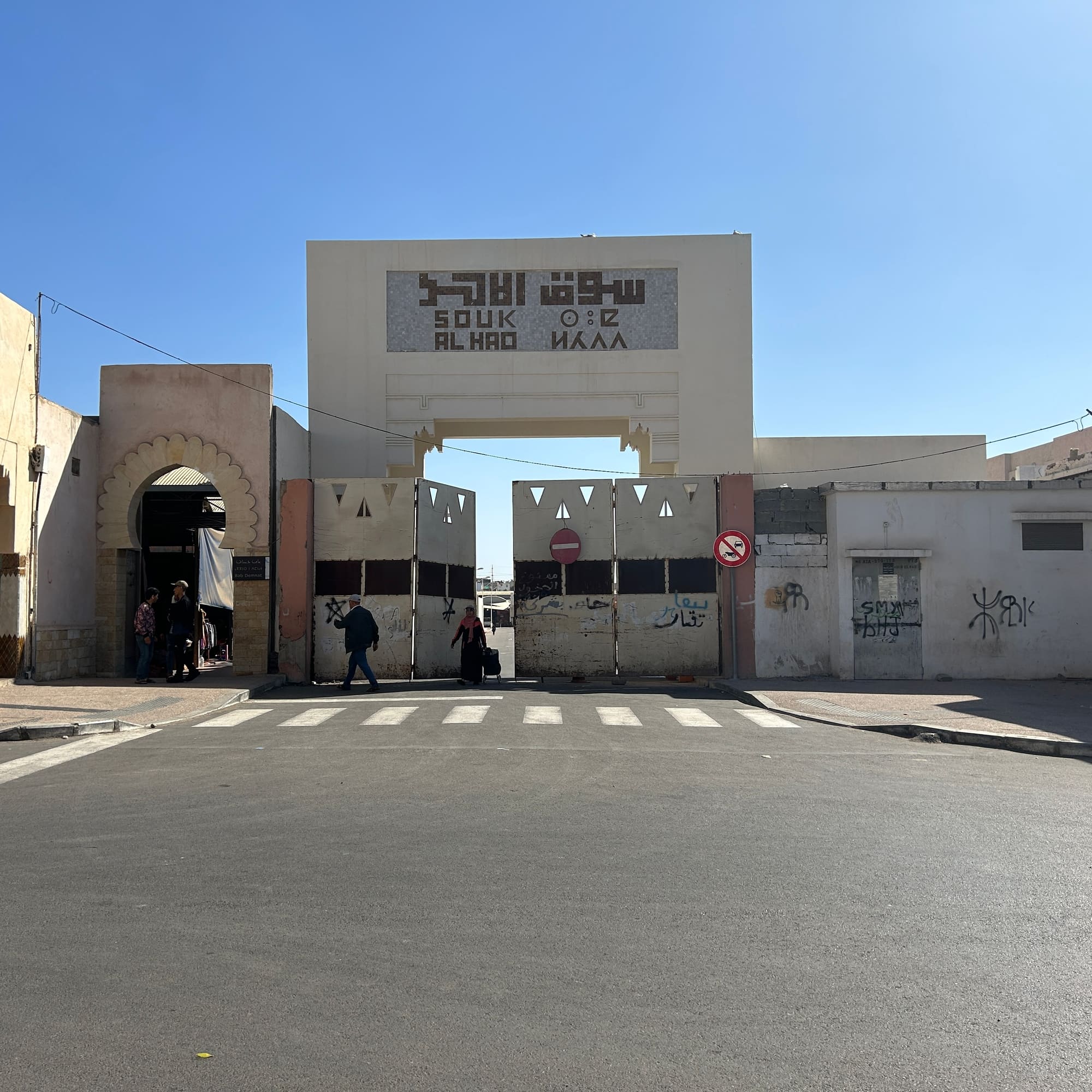
Souk El Had is Agadir's commercial heart: thousands of stalls behind a wall with about a dozen gates, where locals do their shopping. Here is what you'll find and how to make the most of it.
About 30 min
From the riad
Mondays
Closed
Over 10 ha
Area
Thousands
Stalls
Agadir's great market
El Had means Sunday in Arabic: it was originally the Sunday market. Today it is open every day except Monday and covers more than ten hectares, inside high walls.
No tourist set here: you'll meet Agadir families buying fruit, spices or festive clothes. It is the best way to see the city's everyday life.
What you'll find
The souk is organised by area: just follow the smells and colours.
Fruit and vegetables
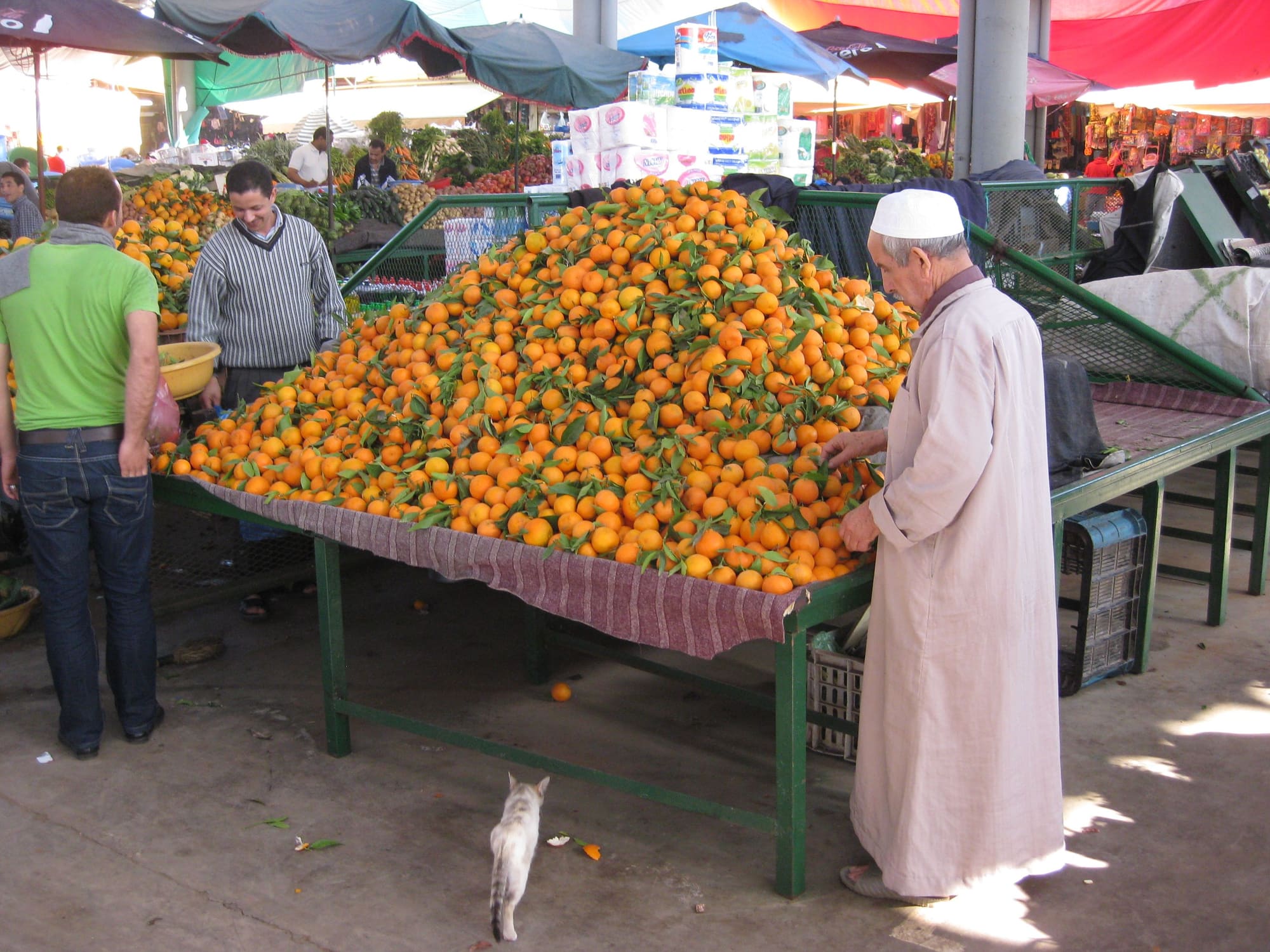
Mountains of oranges, dates, figs and vegetables from the Souss, the great farming region around Agadir.
Spices and olives
Cumin, ras el hanout, saffron, olives of every colour and preserved lemons.
Argan and amlou
Argan oil is the region's speciality. Amlou, a paste of almonds, honey and argan oil, is part of the riad's breakfast.
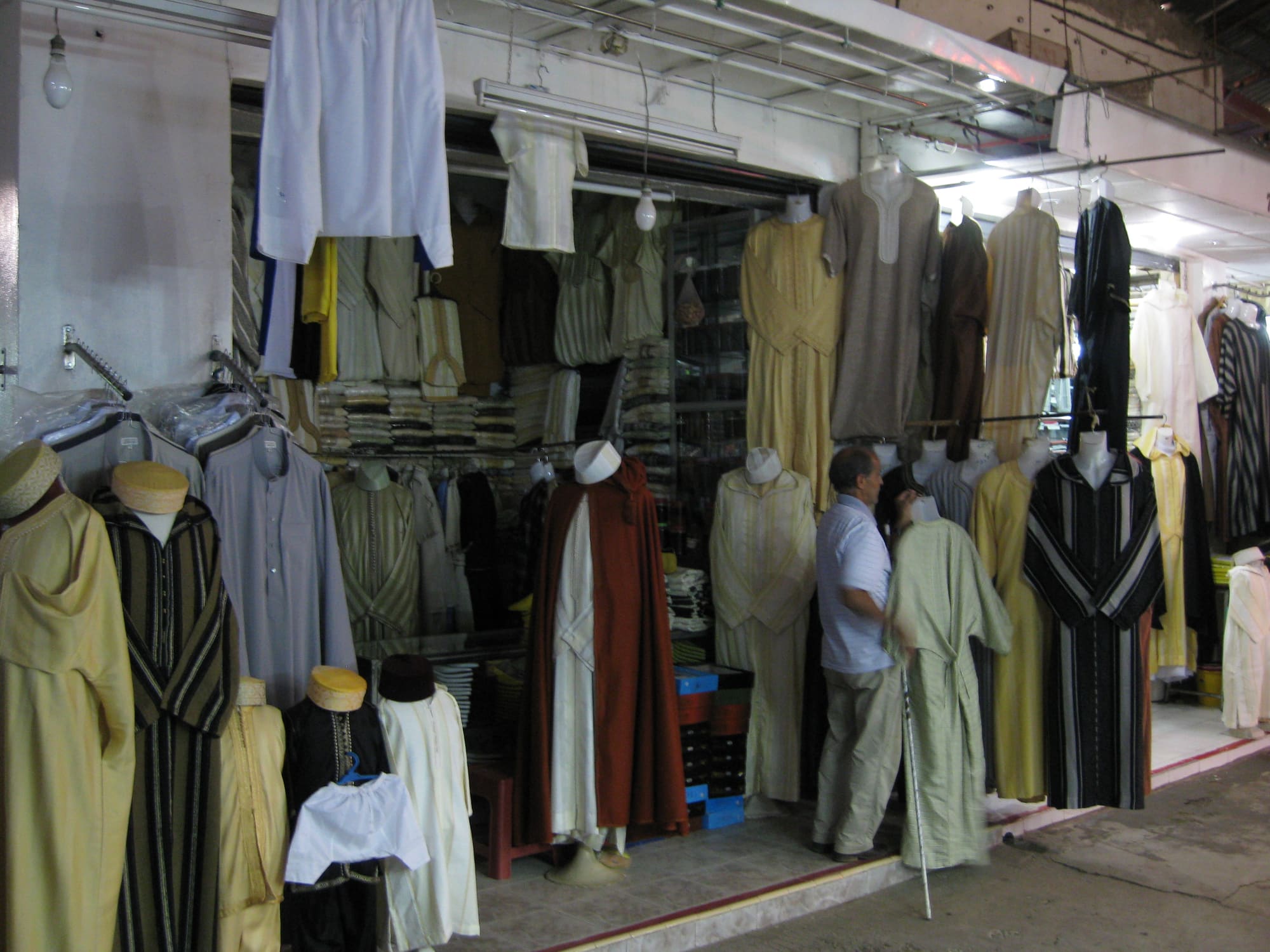
Traditional clothing
Djellabas, kaftans and babouche slippers, from everyday wear to festive outfits.
Crafts
Pottery, basketry, rugs, lanterns and Berber jewellery.
When to go
The souk is closed on Mondays. Mornings are calmer and cooler: it is easier to get around and the fruit stalls are fully stocked. At weekends, especially on Sundays, the atmosphere is liveliest.
Opening hours vary from shop to shop: come in the morning and allow two to three hours to see it without rushing.
Haggling and shopping smart
A few habits for a pleasant visit.
Take a first look around
Compare before buying: the same items turn up in several alleys.
Haggle with a smile
For crafts and clothing, bargaining is part of the game. Fruit and vegetables usually have fixed prices.
Bring dirhams
Most stalls only take cash, in small notes.
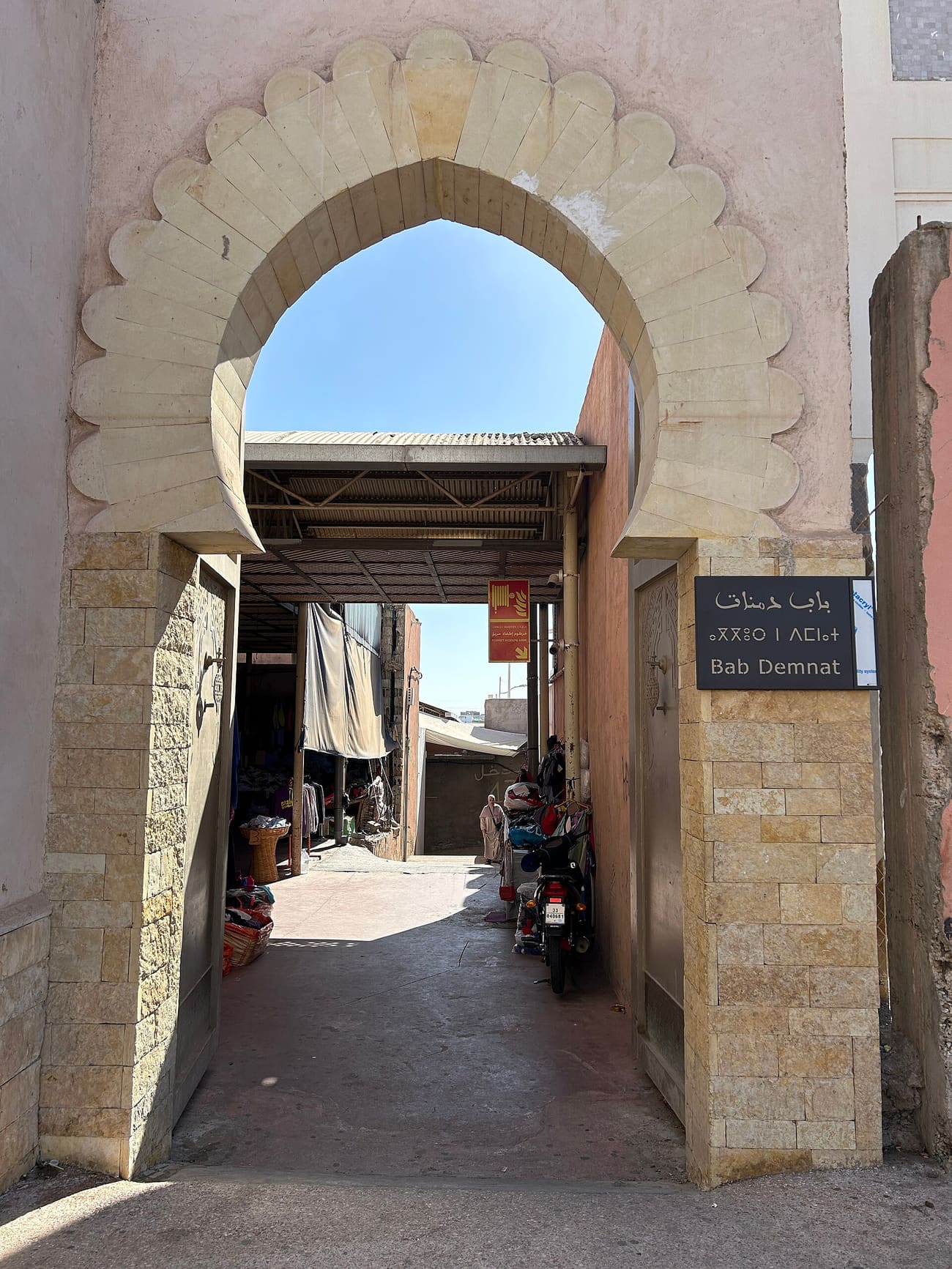
Remember your gate
Note which gate you came in by: the souk is big and the alleys look alike.
Keep an eye on your belongings
As in any crowd, especially on Sundays.
Getting there from the riad
The souk is about 30 minutes by car from Riad Asmaa. The riad arranges the trip with a licensed tourist transport agency, with optional guided, personalised accompaniment for your souk visit.
The souk combines easily with the Kasbah of Agadir Oufella and its cable car, or with a late afternoon on the beach and promenade.
Frequently asked questions
Which day is Souk El Had closed?
Monday. It is open the other six days of the week.
What does El Had mean?
Had means Sunday in Arabic: it was originally the Sunday market, and Sunday is still its busiest day.
How much time should I allow?
Two to three hours to wander without rushing, more if you love browsing.
Can I go with a guide?
Yes. The riad arranges the trip with a licensed tourist transport agency, with an optional guide for the souk visit.
What should I bring back from Souk El Had?
Argan oil, amlou, spices, babouche slippers, pottery and basketry are the most typical souvenirs.